Welder (GMAW & GTAW)
GOVERNMENT APPROVED COURSE
Welder (GMAW & GTAW) Course Overview
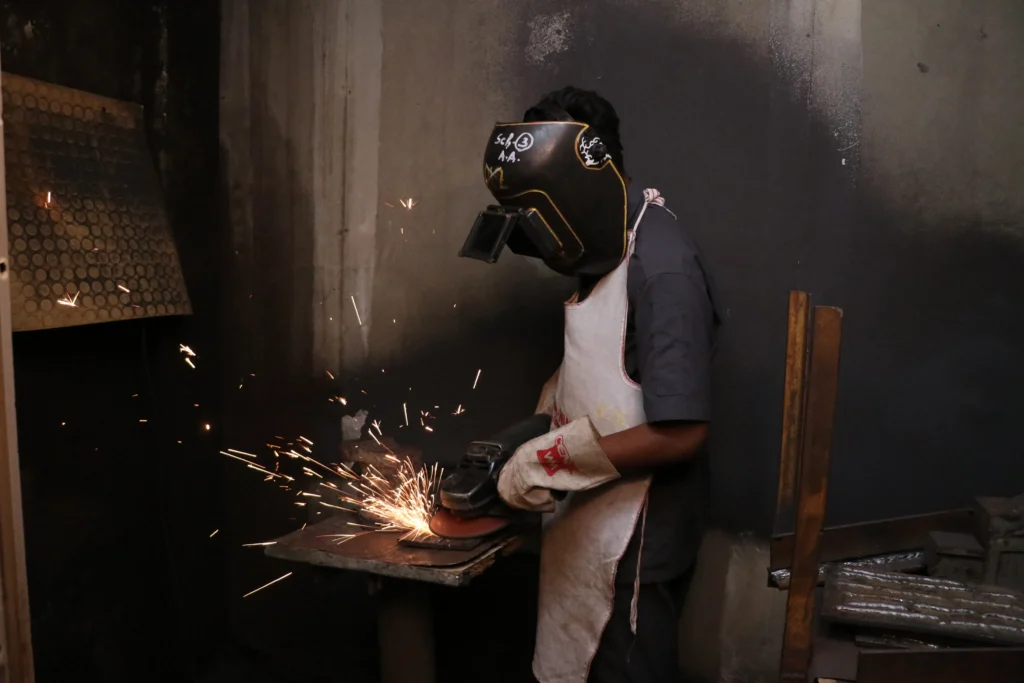
The broad components covered under Professional Skill subject are as below:
-
The practical training starts with basic welding and the candidate is imparted training on viz., Welding (Gas & ARC), pipe joints, MS sheet / plate joints which leads to multi-skilling.
-
The safety aspects cover components like OSH&E, PPE, Fire extinguisher, First Aid etc.
-
Perform visual inspection of metal by using different methods like bend test, tensile test, hardness test, impact test etc.
-
The learner does practical of surface defects inspection by dye penetrant inspection, subsurface inspection by magnetic particle testing method, interprets radiographic films of weldments and prepares reports after welding inspection.
eligibility criteria
Candidates applying for the welding courses must meet the basic requirements set for each program. Applicants are advised to review the individual course details or contact the institute for accurate and up-to-date information.
- Must have passed a minimum of 8th standard.
- Must be at least 150 cm tall, weigh a minimum of 40 kg, and have normal eyesight and hand coordination.
- The course commences in the first week of July every year.
Career Opportunities
Graduates of NCVT-recognized welding courses are qualified for a wide range of roles across industries such as construction, manufacturing, shipbuilding, oil & gas, railways, and public sector undertakings. Common job positions include:
- Welder (Arc/Gas/MIG/TIG)
- Structural Welder
- Pipe Welder
- Fabrication Technician
- Welding Inspector (with experience + certifications)
- Maintenance Welder
- Fitter – Welder
- Boilermaker
- Industrial Welder
- Workshop Assistant / Technician
- Welding Trainer (with advanced experience)
Many graduates also pursue apprenticeships under the Apprenticeship Act, and some explore overseas opportunities in the Gulf, Europe, and Southeast Asia where NCVT certification is valued. They are also eligible to work on government-funded infrastructure projects such as metro rail systems, railways, national highways, oil & gas pipelines, smart city projects, shipyards, and power plants.